by WSSAdmin | Sep 8, 2019
UC Davis Health is well on the way to achieving ambitious sustainability goals while also improving its environment of care. Recent water conservation fixture retrofits by Water Saver Solutions (WSS) will save the hospital 16 million gallons of water annually, reduce sewer and energy costs, and provide antimicrobial fixture benefits. The project incorporates WSS’ Fixture Care™ program, which provides annual preventative maintenance, summary reports and documentation to support the hospital’s Legionella Water Management Plan.
Under its Sustainable Practice Policy, the University of California Office of the President (UCOP) has set a goal to reduce growth-adjusted potable water consumption on all campuses and health locations by 20% by 2020 and 36% by 2025 (compared to a three-year average baseline of fiscal years 2005-2008).
In June 2018, WSS contracted with UC Davis Health through its Energy Manager to perform a campus water audit on 39 buildings and 142 acres. Results of the audit identified projects that would potentially reduce water usage by 24% with a combined ROI of less than 3 years.
First phase projects were met with infection control concerns, but after Patient Care Services learned how WSS’ Fixture Care™ program benefited UC Irvine Health, the project received their approval and support. WSS’ Fixture Care™ program, which is unique in the healthcare industry, helps hospitals to be proactive in reducing potential fixture biofilm and provides compliance documentation that hospitals can use to meet Centers for Medicare & Medicaid Service (CMS) requirements for water management policies.
In June 2019, WSS retrofitted 1,091 toilets and 2,652 faucet and showerhead fixtures. The entire project was completed in just over three weeks.
Toilets were retrofitted with dual-flush handles that reduce water usage by 30%. Faucets were retrofitted with anti-microbial, flow-optimized faucet laminars that use silver ion polymers to help reduce biofilm. Showers were retrofitted with anti-microbial Medi-Shower™ showerheads that allow flushing and cleaning in-place to reduce biofilm; the showerheads’ Medi-Flush inserts can be replaced quickly without removing the showerhead, reducing costs.
Building on the success of the completed retrofits, UC Davis Health plans to continue with retrofitting the hospital’s sterilizers and landscape irrigation systems.
“We’re proud to be helping UC Davis Health move closer to achieving UCOP goals for water reduction,” said Charles Bragdon, President of WSS.
A nationally renowned 625-bed facility, UC Davis Health is a leading referral center for the most seriously injured or ill patients and the most medically complex cases. It is ranked one of the nation’s best hospitals and one of California’s five best hospitals by U.S. News & World Report.
by WSSAdmin | Feb 26, 2019
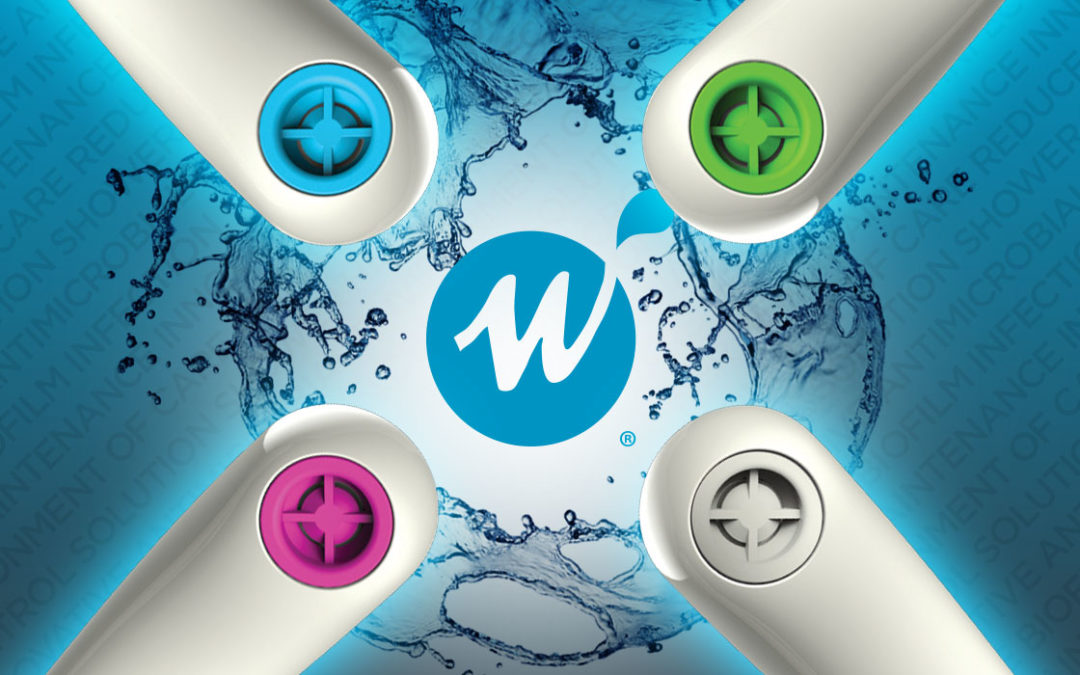
An innovative, antimicrobial shower head now offered by Water Saver Solutions (WSS) gives hospitals a solution for minimizing the risk of bacteria growth while improving the environment of care. The Medi-Shower™ shower head allows flushing and cleaning in-place to reduce biofilm.
“Shower head maintenance is a service that our hospital clients have requested for many years,” says Charles Bragdon, President and founder of Water Saver Solutions. The Medi-Shower™ features Medi-Flush inserts that can be replaced quickly without removing the shower head, reducing costs. Color-coding provides visual confirmation of maintenance.
Medi-Shower™ is widely used in the U.K. and introduced in the U.S. only recently by Pall Medical. WSS is partnering with Pall Medical, a global leader in filtration, separation and purification systems and the exclusive U.S. distributor of Medi-Shower™, to sell the shower heads, which it also installs and maintains. “Thanks to our relationship with Pall Medical, we are now able to provide the Medi-Shower™ as well as ongoing shower head maintenance,” says Bragdon. “We’re excited about the possibilities Medi-Shower™ offers and look forward to expanding the services we deliver to help hospitals enhance their environment of care.”
WSS clients Prime Healthcare and Citrus Valley Health Partners are excited about the new shower heads and maintenance capability, too. They are the first U.S. healthcare facilities to take advantage of the new technology and WSS’ maintenance program.
As part of its faucet and shower head maintenance program, WSS creates a summary report that can be included in a hospital’s Legionella Water Management Plan, enhancing documentation of the hospital’s compliance with ASHRAE standard 188 as required by CMS guidelines.
by WSSAdmin | Jan 21, 2019
A small investment in water conservation solutions is paying off big for Saddleback Medical Center, a 252-bed hospital in the MemorialCare Health System. Thanks to water-saving retrofits recommended and implemented by Water Saver Solutions (WSS), Saddleback Medical Center’s average monthly water costs decreased by 32.6% and average monthly water use decreased by 37.4% over a nine-month period.
The savings were verified through measurement performed by an independent third-party company, Ecom-Energy, using its EnerVisor software.
WSS found and obtained utility company rebates that reduced the hospital’s costs for the retrofits by more than 61%. As a result, the project achieved ROI in less than six months. In the first nine months after project completion, the hospital saved $26,000 in water and energy costs.
In March 2017, WSS audited water and energy use at MemorialCare’s three Southern California hospitals—Saddleback Medical Center, Orange Coast Medical Center and Long Beach Medical Center—and provided conservation recommendations. The audits of Saddleback and Orange Coast were conducted at no cost to the hospitals, thanks to a unique incentive program that WSS developed with Southern California Gas.
Saddleback Medical Center moved forward with WSS’s recommendations. Between July 2017 and December 2017, WSS installed 109 low flow shower heads and 762 faucet laminar flow control devices and retrofitted seven medical sterilizers with water-saving kits.
Saving water and gas isn’t the only benefit of WSS’s conservation efforts. WSS also helps protect hospitals’ faucet spouts and showers from bacteria growth by installing faucet laminars and shower heads that have an antimicrobial component and providing an ongoing maintenance program.
by WSSAdmin | Dec 17, 2018
Centinela Hospital Medical Center, part of Ontario, CA-based Prime Healthcare system, is enjoying rapid ROI on water conservation measures implemented by Water Saver Solutions (WSS)—and other Prime Healthcare hospitals should soon see substantial savings, too.
In April 2017, retained WSS to survey water usage at its 11 local hospitals.The surveys are part of a unique partnership between WSS and Southern California Gas. The utility contracts with WSS to audit Level 1 and Level 2 hospitals in its service area and recommend ways hospitals can reduce their use of water and natural gas. WSS provides the audits for free, then works with hospitals to find and maximize available rebates and incentives to reduce the costs of the proposed changes.
WSS’s audit estimated that Centinela Hospital Medical Center could save 7.7 million gallons of water annually by putting its recommendations into action. In September 2017, WSS retrofitted faucets at Centinela Hospital Medical Center with flow-optimizing laminars, installed anti-microbial showerheads, and retrofitted five medical sterilizers with water-saving kits.
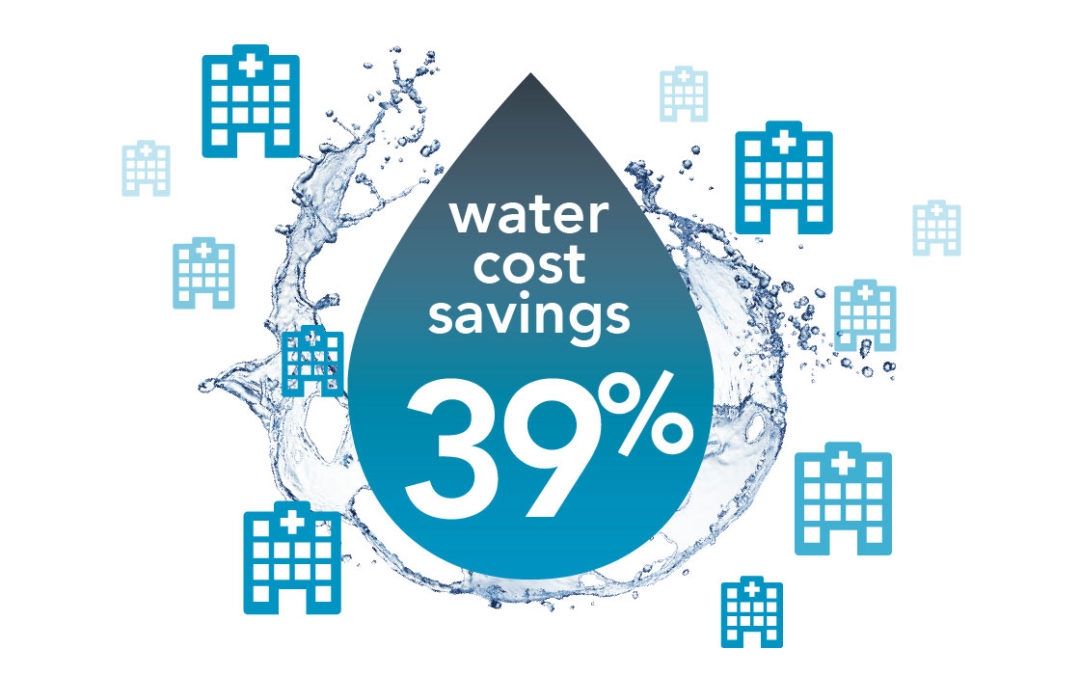
Internal measurement verification conducted by WSS found that these changes surpassed the savings goal and cut the hospital’s water costs by an average of 39% on two of its three water meters between 2016 and 2018.
Thanks to the success of the Centinela Hospital Medical Center project, Prime Healthcare has retained WSS to carry out its water conservation recommendations at other California hospitals. WSS began work on Huntington Beach Hospital and Garden Grove Hospital in December 2018.
The partnership with Southern California Gas has been so successful that the utility recently extended WSS’s contract through December 2019.
by WSSAdmin | Aug 3, 2018
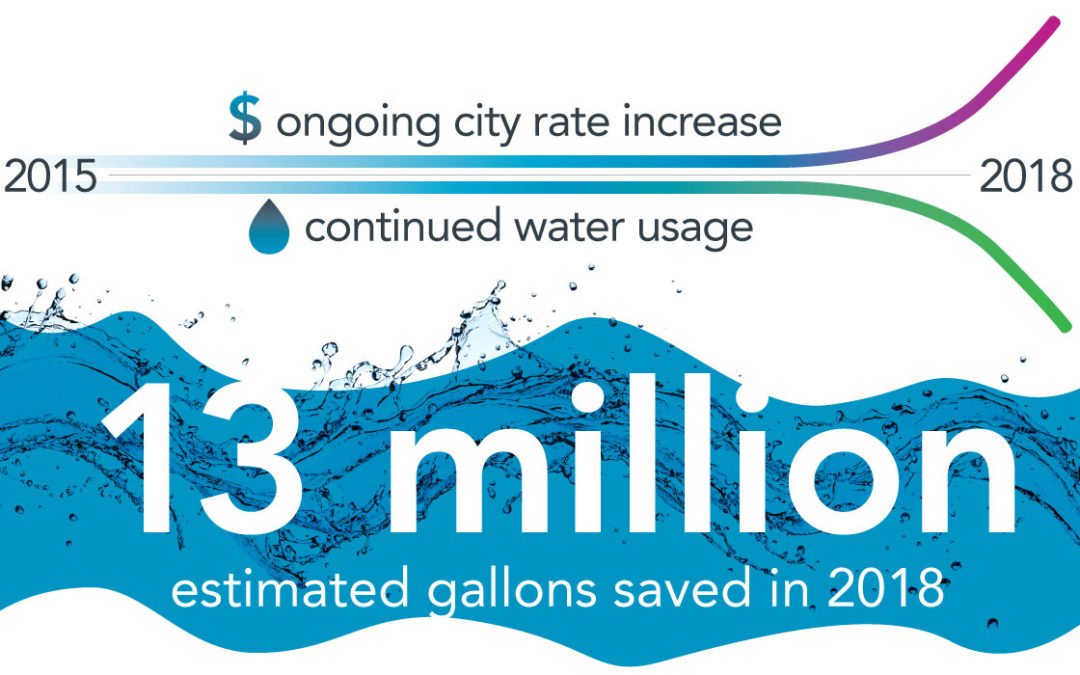
The City of Oceanside has raised its rates by 44% since 2015—but water costs at Tri-City Medical Center in Oceanside, CA, have gone down, thanks to water conservation measures by Water Saver Solutions (WSS).
Since January 2015, the hospital’s water cost per unit has soared from $8.60 to $12.14. But water-saving equipment that WSS recommended and installed has significantly reduced water usage. Best of all, ROI on the project was less than a year.
“Between 2015 and 2017, we saved 8 million gallons of water,” said Chris J. Miechowski, Director of Facilities & Construction at the full-service, 397-bed hospital. This year, the facility is on track to do even better: Miechowski estimates saving 13 million gallons in 2018.
In 2015 WSS installed low-flow showerheads, flow-optimized faucet laminars, pre-rinse sprayers and sterilizer retrofit kits at Tri-City Medical Center. WSS also negotiated incentives and rebates from the Metropolitan Water District of Southern California and San Diego Gas and Electric that reduced the project’s net cost to the hospital by 52%.
In 2016 WSS retrofitted the facility’s toilets and urinals with water-saving dual-flush handles; this time, utility company rebates and incentives slashed the project’s net cost by 64%.
‘[WSS] did all the work [to obtain the incentives]—I didn’t have to do anything,” said Miechowski. “They provided everything I needed to sell the proposal to the board, and since ROI was less than a year, I didn’t have to ask for any money from the board.”
WSS audits hospitals’ water and energy use and makes recommendations for conservation. The company then works with local utilities to find, negotiate and manage rebates and incentives that drastically reduce the hospitals’ cost of implementing the recommendations. In addition to saving water and gas, WSS helps protect faucet spouts and shower heads from bacteria growth by installing faucet laminars and shower heads with an antimicrobial component and providing an ongoing maintenance program.
by WSSAdmin | May 14, 2018
“What gets measured gets managed,” Peter Drucker once said. The management guru knew that measuring something is the first step to improving it—and measurement verification proves that Water Saver Solutions’ water conservation solutions have helped Redlands Community Hospital improve its bottom line.
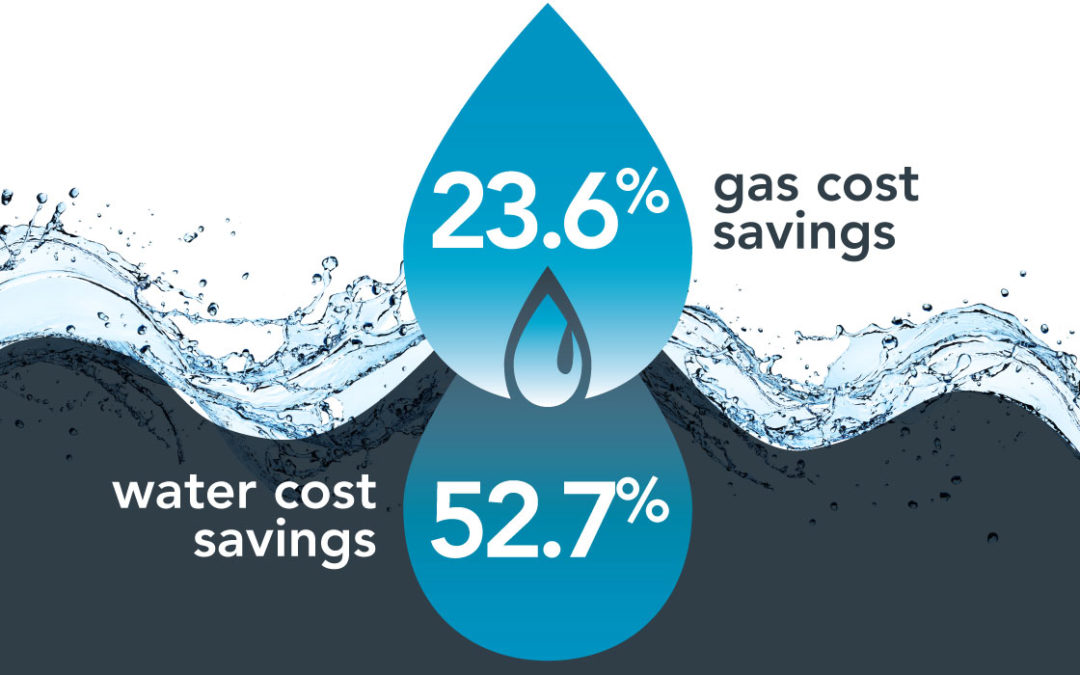
In just 0.9 years, the independent hospital in Redlands, CA, experienced proven savings and ROI. Water Saver Solutions reduced the hospital’s water costs by 52.7% and its natural gas costs by 23.6% from 2015 to 2016, according to measurement verification performed by independent third-party company Ecom-Energy Inc., using EnerVisor Software. As of December 2017, natural gas usage had been reduced an additional 29.8% and water usage an additional 10.6% compared to 2016.
Water Saver Solutions began installing low flow showerheads, faucet laminar flow control devices, wall dialysis adapters, and pre-rinse sprayers at the 229-bed hospital beginning in December 2015. By finding and capitalizing on Southern California Gas incentives, Water Saver Solutions slashed Redlands Community Hospital’s costs for the project by more than 50%.
Water Saver Solutions delivered even more savings by auditing Redlands Community Hospital’s cooling tower evaporation and providing engineering calculations to show that the hospital was being overcharged for sewer usage. Thanks to this audit, in 2016 Redlands Community Hospital received a sanitation rate adjustment that significantly reduced its sewer usage costs.
WSS audits hospitals’ water and energy use and makes recommendations for conservation. The company then works with local utilities to find, negotiate and manage rebates and incentives that drastically reduce the hospitals’ cost of implementing the recommendations. In addition to saving water and gas, WSS helps protect faucet spouts from bacteria growth by installing faucet laminars with an antimicrobial component and providing an ongoing maintenance program.
by WSSAdmin | Feb 26, 2018
Even when a hospital’s water costs are so low that it seems there are no more savings to be had, Water Saver Solutions helps clients find a way. Just ask Greg Eikam, Director of Facility Maintenance for the University of California Irvine Medical Center (UCIMC) in Orange.
“The best aspect of working with Water Savers Solutions is their depth of knowledge and their tenacity. They found a faucet laminar with an antimicrobial component, which not only saves money and reduces water usage, but also protects patients. They got really creative and supplemented [my budget] with rebates and incentives from the Metropolitan Water District, MWDOC and The Gas Company. I would never have had the knowledge to find the rebates Water Saver Solutions found.”
Greg Eikam Director, Facility Maintenance University of California Irvine Medical Center
UCIMC enlisted Water Saver Solutions to audit its 31-building campus during the recent drought, after Gov. Jerry Brown called for a 20% reduction in water usage statewide. During the audit process, University of California President Janet Napolitano set an additional goal of reducing per capita water use throughout the UC system 20 percent by the year 2020, and 36 percent by the year 2025.
From cooling towers to domestic fixtures and sterilizers, Water Saver Solutions identified many opportunities to save water at UCIMC. There was only one problem: UCIMC’s water costs were already so low that Eikam was worried about ROI.
“The City of Orange [where UCIMC is located] has one of the lowest costs for water in California,” he explains. “That makes it hard to do a project like this and have any kind of payback.”
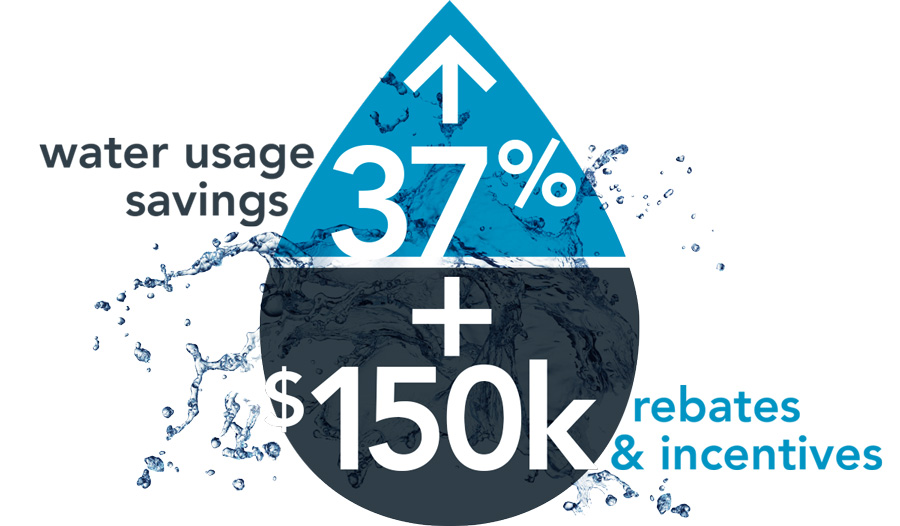
So before Water Saver Solutions started work on the project, they went to work finding ways to help UCIMC supplement its budget. By capitalizing on more than $150,000 in utility and water company rebates and incentives, Water Saver Solutions was able to deliver an average project ROI of 2.7 years-for some projects, less than 1 year.
“I would never have had the knowledge to find those rebates,” says Eikam. Water Saver Solutions worked with the Municipal Water District of Orange County (MWDOC) Water Savings Incentive Program, Southern California Gas, the Metropolitan Water District, and the City of Orange Water Division to obtain and manage rebates.
Thanks to Water Saver Solutions, UCIMC has already surpassed its 2025 conservation goal, cutting water usage by 37 percent. But the project delivered more than just cost savings and water conservation: By installing faucet laminars with an antimicrobial component and providing an ongoing maintenance program, Water Saver Solutions also helped the hospital protect patients.
As the UCIMC campus adds more buildings to its 1.3M GSF, Water Saver Solutions will continue working with the facility to reduce landscape water usage with water-saving irrigation systems.
by WSSAdmin | Jan 31, 2018
Water Saver Solutions Senior Project Manager Michelle Tarian will be a featured panelist at “Making Waves in Water,” sponsored by Women in Cleantech and Sustainability Tuesday, February 6, in San Francisco.
The prestigious event brings together women in the water industry to discuss water use and efficiency, water conservation, and water treatment across multiple sectors. The goal is to spotlight issues and create solutions to help the world move from water scarcity to abundance.
Michelle’s expertise encompasses comprehensive survey and project management at large multi-building healthcare campuses, all supporting Water Saver Solutions’ mission to enhance water efficiency in the healthcare industry.
The panel will discuss topics such as:
- How water conservation efforts have shifted in light of California’s transition out of drought
- The intersection of infectious control standards with healthcare industry water conservation efforts
- Emerging Water Policy
- What can we do to help conserve water in our everyday life?
Additional panelists will include:
- Ora Cahiken, VP Customer Success Water Smart
- Maureen Erbeznik, Water Technical Advisor for the Los Angeles Better Buildings Challenge, a DOE sponsored national leadership initiative
- Alexandra Causey, Business Development Manager, U.S. Water
Women in Cleantech and Sustainability is a nonprofit organization that fosters an influential network of professionals to further the roles of women in growing the green economy and making a positive impact on the environment.
“Making Waves in Water” will be held Tuesday, February 6, 2018 from 5:30 PM to 8:30 PM at Hult International Business School, 1355 Sansome St., San Francisco, CA 94111. Learn more and register for “Making Waves in Water” here.
by WSSAdmin | Dec 18, 2017
Water Saver Solutions has completed the retrofit of approximately 8,000 water saving devices at Fort Knox in Kentucky. The iconic United States Army post is home to more than 12,000 people.
Prime contractor Clark Energy Group (CEG) contracted with Water Saver Solutions to retrofit more than 4,600 faucets and 3,300 showerheads in more than 400 buildings at Fort Knox. The biggest project yet for Water Saver Solutions, the retrofit will yield more than 20 million gallons in water savings per year.
Conserving water and energy is a way of life at Fort Knox, which has been implementing conservation technologies for over 20 years. In 2015, Fort Knox became the first military installation to achieve energy independence, using natural gas deposits underground to provide its own energy.
Water Saver Solutions is a federally certified Service Disabled Veteran Owned Small Business (SDVOSB) founded by Charles Bragdon, a retired United States Navy Chief. Although the company primarily serves healthcare facilities, Bragdon’s military background combined with his expertise in water conservation made the company an ideal vendor for the Fort Knox project.
by WSSAdmin | Dec 1, 2017
Ontario, CA-based Prime Healthcare has retained Water Saver Solutions to audit all of its hospitals served by Southern California Gas. Named “The Fastest Growing Hospital System” in the country by Modern Healthcare, Prime Healthcare is an award-winning health system operating 45 hospitals in 14 states, including 11 in California.
The contract is part of an innovative program that Water Saver Solutions developed with Southern California Gas in 2016 to help hospitals reduce their use of water and natural gas for water heating.
Southern California Gas contracts with Water Saver Solutions to audit Level 1 and Level 2 hospitals it serves. Audits are conducted at no cost to the hospitals. Water Saver Solutions identifies areas where natural gas is being wasted. Following the audits, the company can also consult with the hospitals to recommend changes, install new equipment and provide ongoing maintenance. Southern California Gas offers hospitals rebates on selected equipment, including flow-restricting faucet laminars, to incentivize these conservation measures.
